Fluent in Everything: How a New Generation Is Weaponizing Cultural Fluidity
There's a moment Jasmine Okafor knows well. It happens at the start of a Zoom call, when she clocks her audience in about three seconds flat — their body language, their vocabulary, the energy in the room — and shifts accordingly. Different cadence. Different references. Different version of herself, but always, she'll tell you, fully herself.
"People call it code-switching like it's something you apologize for," says the 28-year-old Houston-based brand strategist and visual artist. "I call it fluency. And fluency is valuable."
Okafor is part of a growing cohort of young multicultural Americans who are done treating their ability to move between cultural worlds as a liability. Instead, they're leaning into it — hard — as a creative and professional superpower that's reshaping industries from music to tech to social entrepreneurship.
The Old Story, Rewritten
Code-switching has a complicated history in American life. Linguists and sociologists have documented it for decades as a coping mechanism — a way for Black, Latino, Asian, and Indigenous Americans to navigate predominantly white spaces without triggering bias or discomfort. The psychological cost is real and well-researched. Constantly monitoring how you speak, how you carry yourself, what parts of your identity you downplay — it's exhausting.
But something is shifting in how the next generation frames that skill set. Rather than seeing cultural fluidity purely as a survival strategy, a new wave of creators is reclaiming it as a form of literacy — one that most people in a room simply don't have.
"When you grow up toggling between cultures, you develop this almost unconscious ability to read context," explains Dr. Marisol Vega, a cultural studies professor at UT Austin who studies identity and creativity in multicultural communities. "You understand how meaning changes depending on who's in the room. That's not just a social skill — that's design thinking. That's storytelling. That's innovation."
Beats That Belong Everywhere
Nowhere is this more audible than in music. Artists like Bad Bunny, Cardi B, and Lil Uzi Vert have built massive crossover audiences not by sanding down their cultural edges but by leaning into them — blending sounds, languages, and aesthetics in ways that feel genuinely new.
But the phenomenon goes deeper than mainstream stardom. In cities like Chicago, Miami, and Los Angeles, a generation of independent producers and performers are building careers on their ability to soundtrack multiple worlds simultaneously.
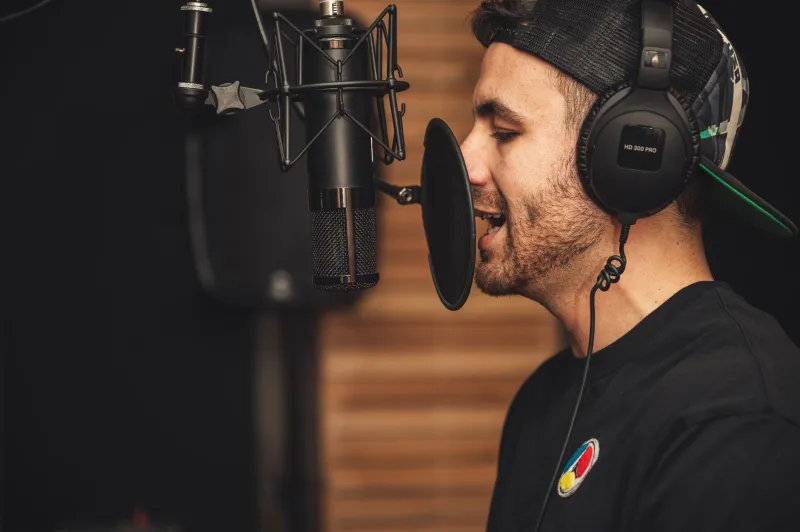
Take Marcus Delgado-Park, a 25-year-old Korean-Mexican producer from East LA who goes by the name Doble. His tracks layer cumbia rhythms with K-pop production aesthetics and hip-hop drum patterns — and they've found audiences on three continents without being marketed to any of them specifically.
"I didn't set out to make 'fusion music,'" Doble says, laughing. "I just made what felt true to me. And it turns out a lot of people feel that same in-between-ness."
That in-between-ness, it seems, has become its own genre.
The Business Case for Being Bilingual in Culture
The creative economy has started to catch on. Venture-backed startups, legacy brands, and media companies are increasingly hunting for what some talent recruiters are quietly calling "cultural translators" — people who can authentically speak to multiple communities without resorting to hollow demographic targeting.
The demand makes sense. The US is only getting more multicultural, and companies that want to stay relevant are learning that surface-level "representation" isn't enough. You need people who actually understand how meaning, humor, and trust work differently across communities.
This is where founders like Priya Nair are thriving. The 31-year-old Indian American entrepreneur built her Chicago-based marketing consultancy specifically around the insight that multicultural consumers can spot inauthenticity from a mile away.
"I spent years being told to 'tone down' my cultural references in boardrooms," Nair says. "Then I started a company where those references are literally the product. Now those same boardrooms are hiring me."
Her firm, Saffron Bridge Creative, counts several Fortune 500 brands among its clients — companies that have realized their internal teams simply lack the lived fluency to connect with communities that are now driving major purchasing power.
When Fluidity Becomes Social Change
Beyond art and commerce, cultural code-switchers are also emerging as some of the most effective community organizers and social entrepreneurs of their generation. The ability to build trust across very different groups — to speak the language of a city council meeting in the morning and a neighborhood block association in the evening — turns out to be a critical skill in coalition building.
Organizations like CultureConnect USA have long understood that the most powerful bridges between communities are built by people who have a foot in multiple worlds. The young leaders who are doing the most interesting cross-cultural work right now aren't presenting themselves as neutral — they're drawing on their specific, layered identities as a source of credibility and connection.
"There's something that happens when someone walks into a room and the community immediately recognizes them as 'one of us,'" says Okafor. "And then they walk into a totally different room and the same thing happens. That person can move things. That person can build things that last."
Owning the Skill
Of course, the reframing isn't without tension. Some scholars and activists push back on the idea of celebrating code-switching too enthusiastically, arguing that it risks letting institutions off the hook for demanding conformity in the first place. The goal, they say, shouldn't be for multicultural people to become more adaptable — it should be for institutions to become more genuinely inclusive.
It's a fair point, and most of the creators we spoke to hold both truths at once. Yes, the system still asks too much of people who don't fit a default mold. And yes, the skill they've developed navigating that system is real, valuable, and worth owning.
"I'm not celebrating the fact that I had to learn this," Doble says. "But I'm not going to pretend the skill isn't mine now. It is. And I'm going to use it."
That might be the most honest summary of where this generation stands: clear-eyed about the circumstances that forged their fluency, and completely unwilling to leave that fluency on the table.
In a country that has always been more multilingual, multicultural, and layered than its dominant narratives admit, people who can hold that complexity — and create from inside it — aren't just surviving. They're setting the pace.