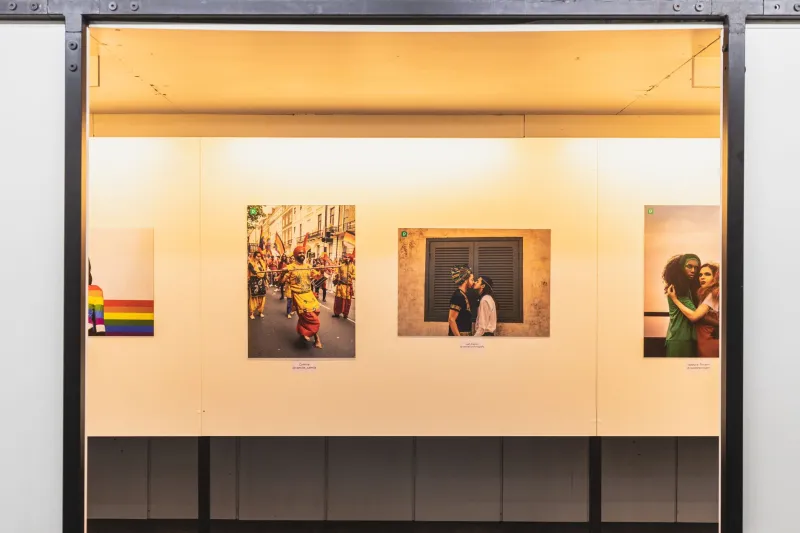
Neither Here Nor There — And That's Exactly the Point: How Young Hyphenated Americans Are Writing New Cultural Rules
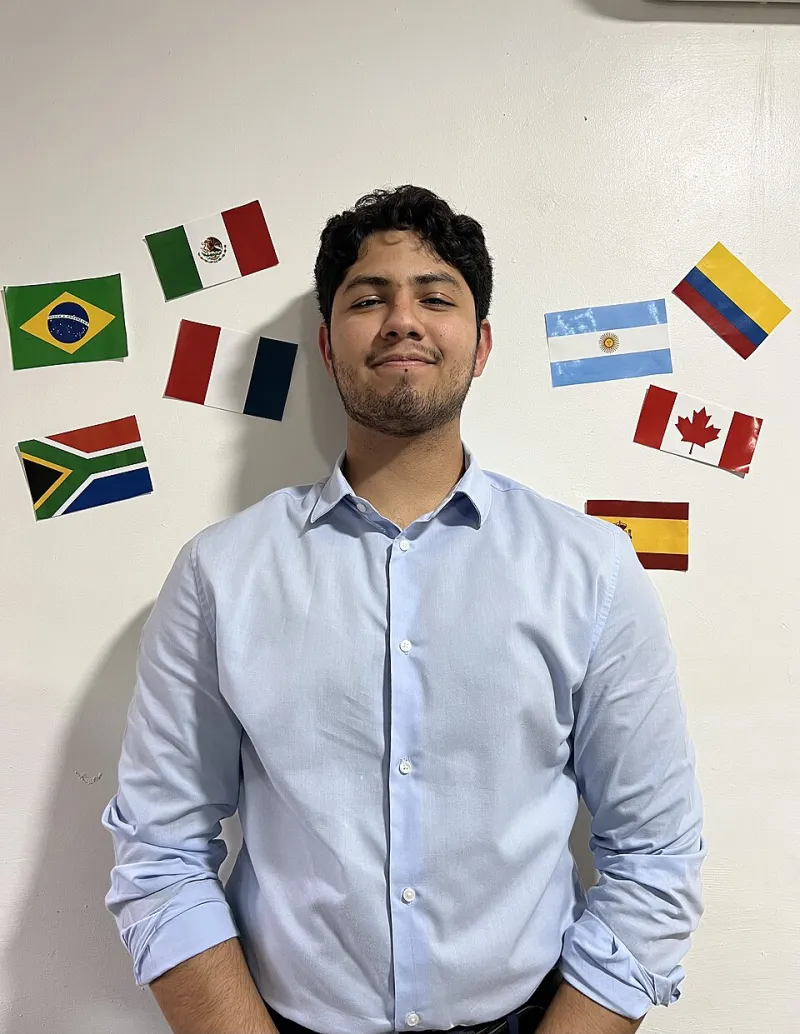
Photo: Dayra Garcia Álvarez, CC BY-SA 4.0, via Wikimedia Commons
Jasmine Tran is 27, she was born in San Jose, and she makes hand-poured candles scented with lemongrass and star anise that she sells at farmers markets under a brand she named after her Vietnamese grandmother. She speaks maybe 40 words of Vietnamese, doesn't observe Tết the way her parents do, and has never been to Vietnam. She also considers herself deeply, authentically Vietnamese American — and she'll explain exactly why if you give her five minutes.
"People want it to be simple," she says. "Either you're connected to your culture or you're not. Either you do it the traditional way or you're selling out. But that's not how any of this actually works."
Jasmine is part of a generation that has largely stopped apologizing for the way it navigates cultural identity. Across the country, second-generation Americans in their 20s and 30s are doing something that defies easy categorization: they're deliberately selecting elements from their heritage backgrounds — a food tradition here, a design aesthetic there, a spiritual practice, a language phrase, a family ritual — while setting aside the parts that feel imposed, irrelevant, or simply not theirs. The result is a new kind of cultural identity that's neither assimilation nor preservation in the traditional sense. It's something more like curation.
The Remix Generation
Let's be honest: every generation remixes culture. That's not new. What feels different now is the self-awareness with which young hyphenated Americans are doing it, and the platforms — social media especially — that make these new identity expressions visible and shareable at scale.
Take Marcus Okonkwo, 31, a graphic designer in Brooklyn whose parents immigrated from Nigeria in the early 1990s. Marcus grew up straddling two very different sets of expectations — his parents' emphasis on formal achievement and traditional Igbo values, and the Black American cultural environment he moved through every day at school and in his neighborhood. For years, he felt like he was performing for two different audiences and satisfying neither.
Now, his design work is explicitly built around the collision of those worlds. He creates visual art that layers Igbo geometric patterns with New York street typography, sells prints through his own online shop, and has built an Instagram following of nearly 80,000 people who, he says, are mostly other second-generation kids who recognize something of themselves in the work.
"I stopped trying to be legible to either side," Marcus says. "I'm not trying to be Nigerian enough for my aunties or Black enough for whoever's keeping score on that end. I'm just making the thing that's actually true to my experience."
Selective Inheritance: What Gets Kept and What Gets Left
The choices these young adults make about which cultural elements to carry forward — and which to leave behind — are rarely random. They tend to reflect something real about what felt nourishing versus what felt like obligation or constraint.
For Sofía Delgado-Park, 24, a second-generation Korean-Mexican American raised in the San Fernando Valley, food is the clearest expression of her hybrid identity. She learned to make kimchi from her Korean grandmother and pozole from her Mexican one, and she's spent the last two years developing fusion recipes that she documents on TikTok. The videos have a relaxed, conversational quality — she talks about both grandmothers while she cooks, explains the cultural significance of different ingredients, and is refreshingly upfront about the things she doesn't know.
What she's chosen not to carry forward is equally deliberate. She doesn't speak Korean or Spanish fluently — she took classes in both but found the pressure around language fluency to be more about proving cultural legitimacy than genuine connection. She also doesn't observe many of the religious traditions from either side of her family. "I respect those things," she says carefully. "They're just not mine. And I think it's more honest to say that than to perform them."
That word — performance — comes up a lot in these conversations. Many young second-generation Americans describe feeling like cultural authenticity has been weaponized against them, used as a gatekeeping tool by both their heritage communities and by outside observers who expect them to fit a particular mold.
The Authenticity Question Nobody Agrees On
This is where things get genuinely complicated, and it's worth sitting with the discomfort rather than smoothing it over.
Not everyone in immigrant communities celebrates the remix approach. Some elders and first-generation parents see the selective adoption of cultural elements — particularly when those elements get aestheticized or commercialized — as a form of dilution. When Jasmine sells lemongrass candles branded with her grandmother's name, is she honoring that heritage or packaging it for a market that finds it charming? When Marcus's Igbo-inspired prints get featured in a design magazine, who benefits from that visibility?
These are real questions, and the young adults navigating them don't always have clean answers. What many of them do have is a more fluid framework for thinking about cultural ownership — one that tends to center intention, relationship, and reciprocity over bloodline or fluency.
"I think the question isn't whether I'm 'authentic' by someone else's definition," says Marcus. "The question is whether I'm being honest about where the work comes from and who it's for. I'm not pretending to be something I'm not. I'm showing exactly who I am — which is complicated."
Code-Switching as Creative Practice
One of the most interesting things happening in this generation is the reframing of code-switching — long understood as a survival strategy, a way of fitting in across different social contexts — as something that can also be a creative superpower.
Young professionals like Priya Sharma, 29, a UX designer in Austin whose parents immigrated from Gujarat, describe moving fluidly between cultural registers not as exhausting performance but as a kind of cognitive flexibility that actually shapes how they approach problem-solving, relationship-building, and creative work. "I think in multiple cultural languages simultaneously," Priya says. "That's not a burden. It's genuinely useful."
This reframe doesn't erase the real fatigue that comes with navigating multiple identity expectations. But it does suggest that the hyphenated experience — long framed as a kind of in-between-ness, a not-quite-belonging-anywhere condition — might actually be one of the more generative positions available in an increasingly mixed, increasingly plural America.
What Comes Next
There's no tidy conclusion to draw here, which is kind of the point. The generation reshaping cultural identity in America right now isn't looking for resolution. They're comfortable — or at least practiced — in the ambiguity. They're building new traditions in real time, mixing and discarding and inventing as they go, and they're doing it publicly enough that younger generations are watching and learning a different set of possibilities.
What they're creating doesn't have a name yet. That's probably fine. Labels have a way of catching up eventually — and until they do, the people doing the actual work of living at the intersection of cultures will keep doing what they've always done: figuring it out as they go.