From Grandma's Kitchen to Main Street: How Heritage Food Is Becoming Serious Business for Second-Gen Entrepreneurs
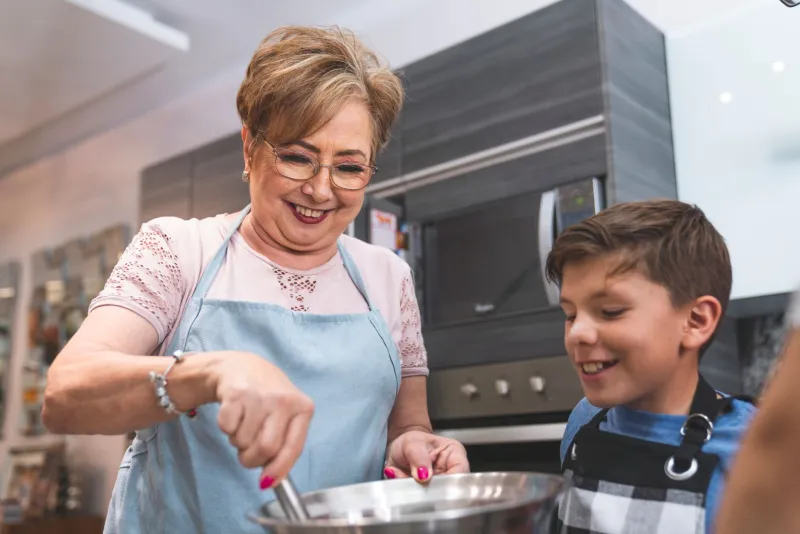
For years, Priya Nair watched her mother make Kerala beef fry every Sunday — a slow, spiced dish that took most of the afternoon and filled their Maryland apartment with the kind of smell that made the neighbors ask questions. Her mother never used a written recipe. It lived in her hands, in her nose, in the memory of watching her own mother cook in Kochi.
Today, Priya runs a South Indian meal kit company out of Baltimore that ships to 22 states. The beef fry is on the menu. So is her grandmother's fish curry, her aunt's coconut chutney, and a dozen other dishes that Priya spent two years meticulously documenting, testing, and scaling — without losing what made them them.
"People kept telling me it couldn't be done at scale," she says. "That the magic would disappear. But I think the magic was always in the story, not just the spice blend. And that part scales just fine."
Priya is part of a rapidly growing cohort of second-generation American entrepreneurs who are turning inherited food traditions into legitimate, scalable businesses — and in doing so, reshaping both the food industry and their own communities.
A Movement With Serious Momentum
This isn't a niche phenomenon. According to data from the James Beard Foundation and various BIPOC food industry advocacy groups, minority-owned food businesses have seen accelerating growth over the past five years, with immigrant-descended founders among the fastest-growing segments. The pandemic, paradoxically, helped — as restaurant closures pushed talented home cooks online, where they discovered that their grandmother's recipes had a national audience hungry for exactly this kind of authenticity.
Social platforms played a significant role. TikTok and Instagram became unexpected launchpads, where a video of someone making their family's jollof rice or birria tacos from scratch could rack up millions of views and generate a waiting list for a product that didn't exist yet. Heritage food, it turned out, wasn't a liability in the marketplace. It was the whole pitch.
"There was this old assumption that immigrant food had to be 'Americanized' to sell," says food industry consultant Dana Park, whose own Korean American family ran a restaurant in LA for two decades. "What we're seeing now is the complete inversion of that. The un-Americanized version is what people are paying a premium for."
More Than a Meal Kit: Food as Cultural Anchor
What distinguishes these ventures from generic food startups is the way they function in their communities. They're not just selling product — they're building cultural infrastructure.
Take Diaspora Co., the Indian spice company founded by Sana Javeri Kadri in 2017. What started as a mission to source single-origin spices directly from Indian farmers has become a full-blown cultural education platform — complete with recipe archives, farmer profiles, and a community of home cooks who treat the brand as a connection to a homeland they may never have lived in. The spices are excellent. But the story is what keeps people coming back.
Or consider Omsom, the Vietnamese and Filipino American-founded sauce starter company that launched in 2020. Founders Vanessa and Kim Pham were explicit from day one: this wasn't fusion, it wasn't "inspired by" Asian flavors, it was the real thing — and they wanted their packaging, their marketing, and their community events to reflect that unapologetically. The brand became a cultural statement as much as a food product.
At a more local level, the same dynamic plays out in cities across the country. In New Orleans, a Honduran American woman named Claudia Rivera runs a catering collective that employs twelve second-generation Central American women, all cooking family recipes at scale for corporate events and private parties. In Detroit, a Yemeni American family has turned their home mandi recipe into a restaurant group with three locations and a wholesale spice line. In Minneapolis, a Somali American chef is building a fast-casual concept rooted in East African grain traditions — with a James Beard nomination and a line out the door.
The Economics of Authenticity
The financial case for heritage food businesses is becoming harder to ignore. When cultural authenticity is the product — not a marketing angle, but the actual core of the business — it creates a kind of competitive moat that's difficult to replicate. A corporate food brand can hire a consultant and approximate a flavor. It cannot approximate the story, the community trust, or the generational knowledge that comes with it.
This is increasingly understood by investors, too. BIPOC-focused food accelerators like the Chobani Incubator, the Urban Innovation Fund's food track, and various regional programs have shifted significant attention toward heritage food founders in recent years. The pitch isn't charity — it's recognition that these entrepreneurs have something genuinely differentiated.
"Investors used to see cultural specificity as a risk — like it limited the market," says Dana Park. "Now the smarter ones see it as a moat. The more specific and authentic you are, the harder you are to copy."
Passing It Down Differently
There's an emotional dimension to this economic story that's hard to separate from the business one. For many second-generation founders, these ventures are also acts of preservation — a way of honoring something that might otherwise disappear.
Priya Nair thinks about this a lot. "My mother didn't write her recipes down because she never imagined they'd need to be written down," she says. "She assumed she'd teach her kids in the kitchen the way her mother taught her. But life doesn't always work that way. We moved, we got busy, the chain almost broke."
Her company, in a very real sense, is a documentation project as much as a food business. Every recipe on her menu was tested with her mother present. Every dish has a story attached. And every customer who orders a meal kit gets a card explaining where the dish comes from — not just geographically, but personally.
"People tell me they cook the food and then call their own parents," she says. "That's not something I planned for. But it might be the thing I'm most proud of."
The Ripple Effect
When heritage food businesses thrive, the benefits extend well beyond the founders themselves. They create jobs within their communities, often hiring people who understand the culture and the cuisine. They anchor neighborhoods — a Bangladeshi sweets shop or a Guatemalan bakery can become a community hub in ways that a chain restaurant simply never will. They generate local pride and visibility for cultures that are often underrepresented in mainstream food media.
And they model something important for the next generation: that the things your family brought with them — the flavors, the techniques, the Sunday afternoon rituals — aren't just sentimental. They're valuable. They're worth protecting, worth sharing, and yes, worth building a business around.
Grandma's recipe was always the real thing. It just took the rest of the market a while to catch up.