Half and Half and Wholly Themselves: The Hybrid Languages Young Americans Are Building in Real Time
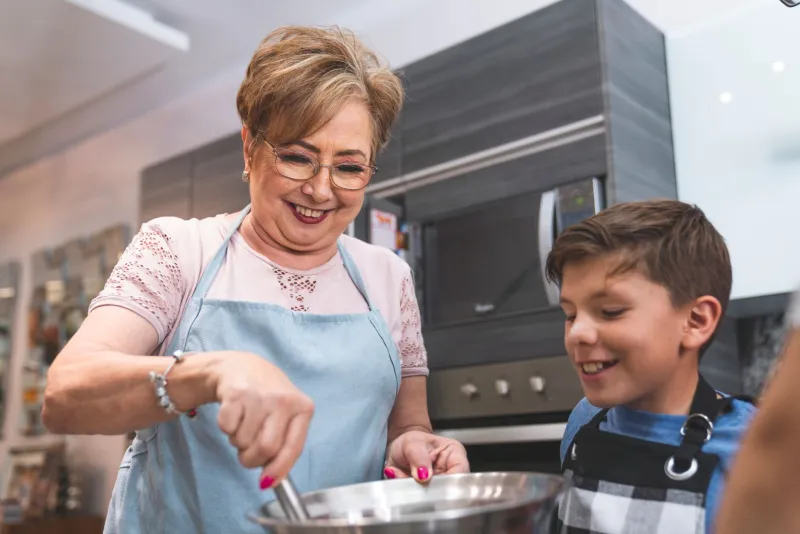
If you've spent any time in a second-generation household, you know the particular texture of a conversation that shifts mid-sentence. English going in, something else coming out. A word that only exists in one language because the other one doesn't have it. A joke that requires three cultural reference points to land properly. You either grew up in that world, or you've watched it from the outside wondering what you were missing.
For a long time, linguists called this code-switching and treated it primarily as an adaptive behavior — something people did to survive in environments that demanded conformity. Flip to professional mode at work, flip back to community mode at home. The implication was always that the switching itself was the compromise, the cost of straddling two worlds.
But spend five minutes on the right corners of TikTok, or sit in on a group chat between second-gen Filipino Americans in the Bay Area, or listen to the way Korean American teenagers in Koreatown talk to each other, and something different becomes clear. These kids aren't code-switching to cope. They're code-switching to create.
More Than Mixing — It's Architecture
There's a meaningful difference between switching between two languages and building something new out of both of them. What's happening in a lot of young American communities right now looks a lot more like the latter.
Spanglish is probably the most widely recognized example, but calling it just "Spanish plus English" undersells it. Spanglish has its own grammar logic, its own vocabulary innovations, its own tonal registers. Troca for truck. Lonche for lunch. Verbs conjugated in one language with roots borrowed from the other. Linguists have documented that fluent Spanglish speakers aren't randomly alternating — they're following consistent internal rules that signal sophistication, not confusion.
The same thing is happening with Hinglish among South Asian American communities, with Konglish on the West Coast and in cities with large Korean populations, with Tagalog-English hybrids that have their own internet slang ecosystem, and with AAVE-influenced speech patterns that have been adopted, adapted, and sometimes appropriated across cultural lines for generations.
These aren't degraded versions of "proper" languages. They're new ones. Or at least new dialects — living, evolving systems that carry cultural memory and community identity in every sentence.
TikTok as a Linguistic Laboratory
If you want to understand how fast this evolution is happening, look at where young people are performing it most visibly: short-form video.
Creators who blend languages mid-video aren't just being authentic — they're building a specific kind of in-group signal. When a Vietnamese American creator drops a Vietnamese phrase into an otherwise English-language video and doesn't translate it, that's intentional. The untranslated moment is the point. It's a wink to the people who get it, and a gentle reminder to everyone else that not everything is for them.
This kind of linguistic gatekeeping-as-community-building shows up across platforms. On Twitter and its successors, certain phrases, memes, and sentence constructions function as cultural passwords. On Discord servers and Twitch streams, hybrid slang evolves in real time, sometimes jumping from one cultural community to another in ways that are fascinating, complicated, and occasionally contentious.
The reach of these linguistic innovations is genuinely staggering. Words and phrases that originated in specific immigrant communities have traveled into mainstream American slang — often without credit, sometimes with it. Either way, the directionality is undeniable: the edges of American culture are feeding the center, not the other way around.
The Politics of Being Understood
None of this happens in a vacuum. Language is political, and the way communities talk about themselves — and who gets to be part of those conversations — carries real stakes.
For a lot of second and third-generation Americans, hybrid language is tied directly to questions of legitimacy. Not fluent enough in the heritage language to be accepted by older generations? Not "American enough" in your speech patterns to avoid being othered in predominantly white spaces? The hybrid dialect becomes the place where you actually belong — a linguistic home that was built for exactly your experience because no existing language quite fit.
This is especially charged for communities where language loss across generations has been a source of grief. When a third-generation Mexican American uses Spanglish, it can be an act of reclamation — a way of staying tethered to a heritage language even when full fluency wasn't passed down. The hybrid isn't a failure state. It's the form that survival took.
At the same time, these dialects can also reinforce internal hierarchies. Who speaks "correctly" within the community? Whose accent gets policed? These tensions are real and worth naming, even as we celebrate the creativity happening alongside them.
What This Means for American Identity
Here's the bigger claim, and we'll stand behind it: what these young people are doing with language is a microcosm of what's happening to American identity itself.
The United States has never been a single, settled culture — it's always been a negotiation, a collision, a remix. What's different now is that the people doing the remixing have platforms, audiences, and a level of self-awareness about the process that previous generations didn't have access to. They're not just living in the hyphen between two identities. They're examining it, naming it, and turning it into art.
At CultureConnect USA, that's exactly the kind of cultural innovation we exist to pay attention to. The new American dialects being built in group chats and comment sections and living rooms across the country aren't side stories. They're the story — of a generation that refused to choose between their inheritances and decided instead to build something that holds all of it.
The language of belonging, it turns out, is still being written. And it sounds like everything at once.