Alone Together No More: How Cultural Third Places Are Quietly Curing America's Loneliness Crisis
Sometime around 2023, the US Surgeon General did something unusual for a public health official — he declared loneliness a national epidemic. Not a mood. Not a phase. An epidemic, with measurable health consequences comparable to smoking fifteen cigarettes a day. The report landed with a thud in headlines, sparked a week of social media commentary, and then... mostly faded.
But for the people building culturally rooted community spaces across the country, that report wasn't news. It was confirmation.
"We already knew," says Marisol Tran, a community organizer in Houston who co-founded a Vietnamese-Latinx cultural social club in 2021. "People were showing up to our events hungry — not just for food, but for something real. They wanted to be seen in a way that a happy hour or a networking mixer just doesn't do."
That hunger has a name now. Researchers call it the "friendship recession" — a measurable decline in close friendships, meaningful social ties, and a sense of belonging that has accelerated sharply since the pandemic. But the crisis didn't start in 2020. For many Americans navigating hyphenated identities, code-switching between cultures, or living far from their ancestral communities, the feeling of not-quite-fitting has been a quiet companion for years.
Why Generic Social Clubs Aren't Cutting It
America has no shortage of ways to fill a calendar. There are trivia nights, pickleball leagues, book clubs, and a seemingly infinite supply of networking events promising "authentic connection" over lukewarm chardonnay. So why aren't they working?
Dr. Amara Osei, a sociologist at Georgia State University who studies social cohesion in immigrant communities, has a theory. "Belonging isn't just about proximity," she explains. "It's about recognition. When you walk into a space and someone understands your cultural references, your food, your humor — maybe even your family's specific immigration story — the social walls come down faster. You skip the small talk and get to the real stuff."
That shortcut to depth is exactly what culturally anchored third places offer. The term "third place" — coined by sociologist Ray Oldenburg decades ago — refers to spaces outside home (first place) and work (second place) where community life actually happens. Think barbershops, cafés, community centers. The concept isn't new. What is new is the intentional design of these spaces around specific cultural identities.
From Dinner Clubs to Co-Working Lounges
Across the country, these spaces are taking wildly different forms — and that variety is part of what makes them work.
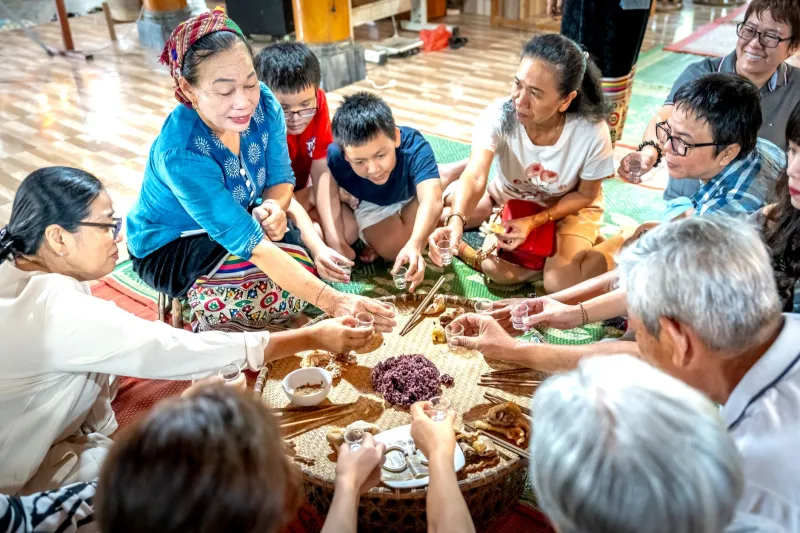
In the Bay Area, a Filipino diaspora dinner club called Kamayan Collective gathers monthly for traditional boodle fights — communal feasts served on banana leaves where everyone eats with their hands. No utensils, no hierarchy, no awkward name tags. "There's something about eating that way that breaks down pretense immediately," says co-founder Dante Reyes. "You can't be stiff when your hands are covered in garlic rice." What started as eight friends around a folding table has grown to a rotating community of over 200 members across three Bay Area cities.
In Brooklyn, Ase Space operates as an Afro-Caribbean co-working lounge and cultural hub — part shared workspace, part community archive, part event venue. Members pay a monthly fee that grants them desk access, but they also get invitations to panels on Caribbean economic history, sound bath sessions rooted in Yoruba tradition, and skill-share workshops where a Trinidadian graphic designer might teach alongside a Haitian accountant. "We wanted to build something that honored where people came from while also investing in where they're going," says founder Kezia Belfort.
In Chicago, a South Asian women's collective hosts monthly "aunty circles" — structured conversations modeled loosely on the informal wisdom-sharing that happens in traditional South Asian family gatherings. No agenda, no facilitator with a clipboard. Just chai, snacks, and the kind of honest talk that many members say they can't have anywhere else.
The Science Behind the Bond
What these spaces have in common isn't just cultural décor or themed menus. It's a specific kind of psychological safety that researchers say is harder to manufacture in culturally neutral environments.
Dr. Osei points to the concept of "cultural homophily" — the tendency for people to form stronger bonds with those who share similar cultural backgrounds. "It's not about exclusion," she's careful to clarify. "It's about ease. When you don't have to explain yourself, you can invest that energy into the relationship instead. And deeper relationships are what actually protect people from loneliness."
Participants back this up anecdotally, again and again. "At a regular networking event, I spend half the night giving context," says Marcus Webb, a member of a Black creative professionals collective in Atlanta. "Here, I just get to be. That's not a small thing."
Building Bridges Without Losing the Core
One tension that organizers navigate carefully is the question of openness. Are these spaces exclusively for people of a specific background, or are they welcoming to curious outsiders?
Most organizers land somewhere in the middle — what Marisol Tran describes as "open doors, but rooted floors." Events are often open to anyone, but the cultural identity of the space is non-negotiable. "We're not a diversity showcase," she says. "We're a home base. People can visit and learn, but the culture isn't up for debate or dilution."
This approach, it turns out, often makes the spaces more appealing to people outside the core community. "There's something magnetic about a space that knows exactly what it is," says Dr. Osei. "Ambiguity doesn't create belonging. Clarity does."
What This Means for American Community Life
The rise of intentional cultural third places isn't just a feel-good trend. It represents a quiet but significant shift in how Americans are choosing to build community — away from the generic and toward the specific, away from the transactional and toward the relational.
For a country still reckoning with isolation, polarization, and the slow erosion of civic life, these spaces offer something quietly radical: the idea that the antidote to loneliness might not be more events, but better ones. Ones where you already belong before you walk in the door.
And honestly? That sounds like exactly the kind of community-building America needs more of right now.