Grandma Knows Best: How Immigrant Families Are Running America's Most Underrated Classrooms
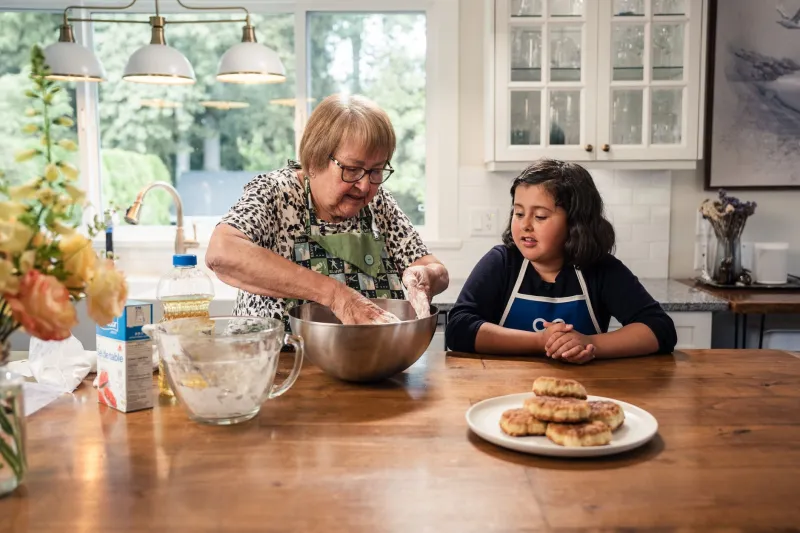
Somewhere in a suburb of Houston, a 68-year-old Vietnamese grandmother named Lan Nguyen is teaching seven neighborhood kids how to write in her native script while a pot of phở simmers on the stove behind her. There's no whiteboard. There's no curriculum binder. There's just Lan, a stack of handwritten flashcards, and decades of lived experience she refuses to let disappear.
This is what education looks like when the system leaves something important out.
Across the United States, immigrant families — particularly first-generation parents and grandparents — are quietly building informal learning ecosystems that operate entirely outside traditional school walls. We're talking language immersion sessions held in living rooms, traditional craft workshops organized in church basements, cooking classes that double as history lessons, and storytelling circles that pass down oral traditions to kids who spend most of their week in classrooms where none of that exists. These aren't replacements for formal education. They're something else entirely — and in a lot of ways, they're filling gaps that formal education hasn't even acknowledged yet.
Why the Kitchen Table Became a Classroom
The motivations behind these grassroots learning programs are layered and deeply personal. For many families, it starts with a quiet kind of grief — the slow realization that a language, a craft, or a way of seeing the world might not survive the generational handoff if nobody does something deliberate about it.
Maria Elena Castillo, a mother of three in Chicago's Pilsen neighborhood, launched what she calls a "cultura circle" three years ago after her youngest daughter came home from school and couldn't identify a single item in her abuela's kitchen. "She knew what a quesadilla was from Chipotle," Maria Elena says with a laugh that carries a little bit of sadness in it. "But she didn't know the names of the tools her great-grandmother used to make tortillas by hand. That felt like a loss I could actually do something about."
What started as a Saturday morning gathering for her own kids has grown into a rotating workshop series attended by around 20 children from the neighborhood. They learn basic Spanish vocabulary through cooking, practice traditional embroidery patterns from Oaxaca, and hear stories from elders in the community who visit as guest speakers. No tuition. No standardized tests. Just knowledge moving the way it always used to — person to person, hand to hand.
The Profiles: Four Families, Four Approaches
The Nguyens, Houston, TX — Lan Nguyen and her daughter Phuong run a twice-weekly language and calligraphy program for Vietnamese-American children in their extended community. What began as tutoring for Phuong's own kids has expanded to include families from three different zip codes. Lan handles instruction in Vietnamese language and traditional ink-brush writing; Phuong manages logistics and communicates with parents in English. Together, they've created a bilingual bridge that neither could build alone.
The Osei-Mensahs, Atlanta, GA — Kwame Osei-Mensah, a first-generation Ghanaian American, runs weekend sessions in his garage that he calls "the drum circle school." Kids learn traditional Akan percussion patterns, but the curriculum doesn't stop there. Kwame weaves in lessons about West African history, the significance of different rhythmic traditions, and the role of music in community rituals. Parents often stay and learn alongside their children. "It's not just about the drumming," Kwame says. "It's about understanding why the drumming matters."
The Patels, Edison, NJ — Priya and Rohan Patel launched a Gujarati language immersion program that now meets three times a week in the basement of a local Hindu community center. They've partnered with two other families to rotate teaching responsibilities, and they've built a small lending library of children's books in Gujarati that families can borrow between sessions. Priya, a former school administrator, has even developed a loose curriculum framework that other families in their network have started adapting for their own use.
The Reyes-Kimuras, Los Angeles, CA — This family is a study in intercultural creativity. Carmen Reyes, who immigrated from Mexico, and her husband Takashi Kimura, a second-generation Japanese American, have built a program that intentionally blends both of their heritages. Their monthly workshops for neighborhood families explore everything from origami to papel picado, often side by side, with explicit conversations about what the two traditions share and where they differ. Their goal isn't just cultural preservation — it's cultural curiosity.
The Real Challenges: Legal, Financial, and Logistical
Running these programs isn't without friction. Depending on how they're structured and how many children are involved, families can find themselves navigating murky legal territory around home education regulations, which vary significantly from state to state. Most of the programs profiled here operate as informal community gatherings rather than registered homeschool cooperatives, which keeps them outside most regulatory frameworks — but it also means they have limited access to funding and institutional support.
Money is a consistent challenge. A few families have turned to platforms like GoFundMe or applied for small grants through local cultural organizations and community foundations. Others keep costs minimal by relying on donated materials and volunteer time. The Patels have explored fiscal sponsorship arrangements that would allow them to receive tax-deductible donations through a partnering nonprofit, a model that more families are beginning to look into.
Community support, though, tends to be the glue that holds everything together. Word-of-mouth is how most of these programs grow. Parents talk to other parents. An elder hears about what's happening and offers to contribute. A local cultural organization provides space. The informal networks that already exist within immigrant communities turn out to be remarkably effective distribution channels for knowledge.
What Mainstream Education Could Actually Learn Here
There's something worth sitting with in all of this. These families aren't running their programs because they distrust formal education — most of them are deeply invested in their children's academic success in traditional schools. They're running them because they've identified something that mainstream curricula consistently undervalue: the idea that cultural knowledge is educational knowledge.
Linguistic fluency, historical context, artistic tradition, community storytelling — these aren't soft extras. They're cognitive tools. Research in multilingual education has long supported the idea that children who maintain strong connections to their heritage languages tend to develop stronger overall language and literacy skills. The families building these programs may not be citing academic studies, but they're drawing on something just as valid — generational wisdom about what children need to thrive.
What they've built, almost entirely on their own, is a reminder that education has always happened in more places than schools. The kitchen table has always been a classroom. These families are just making it official.