Speaking the Same Street: How Bilingual Cultural Hubs Are Quietly Transforming American Neighborhoods
The Myth That Language Divides Us
There's a story we've been told about immigrant communities and language — that clinging to a mother tongue slows assimilation, creates parallel societies, and ultimately weakens the social fabric of American neighborhoods. It's a tidy narrative. It's also largely wrong.
Talk to the people actually running bilingual cultural spaces in cities like Chicago, Houston, or Miami, and you get a very different picture. Language, it turns out, isn't a wall. In the right hands, it's a door.
"When someone walks in and hears their language spoken — not just tolerated, but celebrated — their whole posture changes," says Marisol Fuentes, co-director of La Raíz Cultural Center in Chicago's Pilsen neighborhood. "They stop shrinking. And once people stop shrinking, they start contributing."
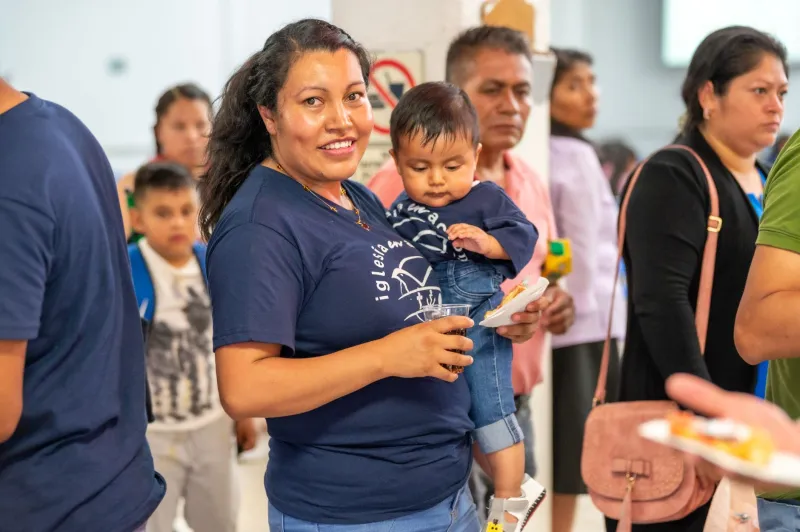
La Raíz runs bilingual programming in Spanish and English across arts, job readiness, and youth education. But what makes it tick isn't the curriculum. It's the atmosphere — an environment where grandmothers feel as comfortable as their college-age grandkids, and where a new arrival from Oaxaca can sit next to a third-generation Mexican-American without either of them feeling out of place.
Intergenerational Glue
One of the quieter superpowers of bilingual cultural spaces is what they do for families across generations. In many immigrant households, a painful gap opens up as younger generations shift toward English-dominant communication and older relatives remain rooted in their first language. The result can be a kind of emotional estrangement that happens right at the dinner table.
Cultural centers that operate in two languages simultaneously create rare neutral ground. They're spaces where a teenager can translate for their abuela without embarrassment, or where a grandparent's stories — told in Tagalog or Haitian Creole or Vietnamese — are treated as cultural assets rather than inconveniences.
The Mango Tree Collective in Houston runs a bilingual Vietnamese-English storytelling series specifically designed to bridge this gap. Founder Linh Nguyen started it after watching her own parents disengage from community life because most local programming assumed English fluency.
"My dad is a brilliant man. He ran a business in Saigon. But at most community events here, he just sits quietly because no one's talking to him," Nguyen says. "We wanted to build something where his knowledge is the point — where what he knows in Vietnamese is exactly what people are there to hear."
The series has since grown into a monthly event drawing mixed audiences of Vietnamese immigrants, their American-born children, and curious neighbors from outside the community altogether.
Economic Ripples You Don't Always See
Bilingual cultural spaces aren't just good for the soul. They're frequently good for the block.
Research on ethnic cultural districts consistently shows that vibrant cultural institutions attract foot traffic, support adjacent small businesses, and increase neighborhood visibility in ways that draw outside investment. But beyond the economics of cultural tourism, bilingual hubs create direct economic pathways for community members.
Language access programs — often embedded inside arts and culture organizations — help immigrants navigate everything from healthcare systems to business licensing. The Esperanza Center in San Antonio, for example, runs legal clinics, financial literacy workshops, and small business mentorship entirely in Spanish alongside its robust arts programming. The integration isn't accidental.
"Culture and economics are not separate things for us," says Esperanza's executive director. "When someone feels seen and valued in their own language, they're more likely to engage with the resources that help them build stability. The art opens the door. The workshops help them walk through it."
Making Space in the Mainstream Conversation
There's also something worth naming about what bilingual cultural institutions do for the broader American cultural conversation. When heritage languages are treated as valid and valuable — not just in immigrant enclaves but in mainstream-facing programming, theater productions, and public festivals — it shifts how American culture understands itself.
Some of the most exciting new theater in New York right now is happening in spaces like the Puerto Rican Traveling Theatre, which has been staging bilingual productions for decades. Young playwrights are writing scripts that move fluidly between English and Spanish, not as a gimmick, but because that's how their characters actually talk. That fluidity is American. It's just an America that hasn't always seen itself on stage.
"Code-switching isn't a deficit," says one playwright who asked to remain unnamed ahead of her upcoming production. "It's a skill. It's creativity. And when audiences see characters doing it naturally, something clicks."
How to Connect With Bilingual Cultural Spaces Near You
If you want to support or engage with bilingual cultural institutions in your city, the entry points are more accessible than you might think.
- Show up as a guest. Many bilingual cultural spaces welcome non-speakers to events. You don't need to understand every word to appreciate a performance, a gallery opening, or a community meal.
- Volunteer your skills. Organizations running programming in multiple languages often need help with grant writing, social media, childcare, or event logistics — none of which require bilingualism.
- Donate or advocate. Many of these spaces operate on shoestring budgets. A small monthly contribution or a social media share goes further than you might expect.
- Hire from the community. If you run a business, consider partnering with bilingual cultural organizations for events, catering, or creative services.
The language barrier, it turns out, is less a barrier than a bridge waiting to be crossed. The communities who built these spaces have been waiting on the other side for a while. The door's open.