Roots, Resistance, and Real Estate: What America's Oldest Cultural Neighborhoods Can Teach Us About Belonging
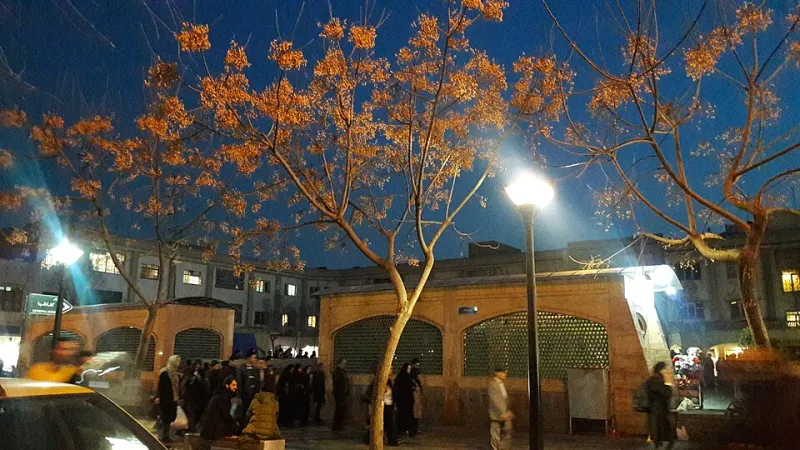
Photo: زهره سادات, CC BY-SA 4.0, via Wikimedia Commons
There's a particular kind of magic that happens when you walk through a neighborhood where the street signs are bilingual, where the smell of pho floats out of a corner shop, where a grandmother yells across the block in a language that her grandchildren are only just learning. These places feel alive in a way that's hard to put into words. But they didn't get that way by chance.
Across the United States, cultural districts—from New Orleans' Tremé to San Francisco's Chinatown to the Italian North End in Boston—have served as anchors for immigrant and minority communities for well over a century. They've been places of refuge, economic engines, cultural classrooms, and sometimes, battlegrounds. And right now, as newer communities try to carve out their own space in an increasingly expensive, rapidly changing America, these neighborhoods are more relevant than ever.
How These Districts Were Actually Built
It's tempting to romanticize the origins of places like Spanish Harlem or Little Saigon in Orange County, California. But the truth is messier—and more instructive.
Many of these communities formed out of necessity, not nostalgia. Discriminatory housing policies, redlining, and outright exclusion pushed immigrant and minority groups into specific parts of cities. What happened next is remarkable: people took those constraints and built something extraordinary within them. Mutual aid societies, cultural associations, local newspapers in native languages, restaurants that served as informal community centers—these weren't just businesses or organizations. They were infrastructure.
In Boston's North End, Italian immigrants who arrived in waves between the 1880s and 1920s created a neighborhood so tightly knit that it became a model studied by urban planners for decades. Jane Jacobs famously praised it in The Death and Life of Great American Cities, pointing to its street-level activity and social cohesion as examples of what makes urban neighborhoods actually work for the people who live in them.
In Little Saigon—a name now shared by commercial districts in cities like Westminster, California, Houston, and New Orleans—Vietnamese refugees who arrived after 1975 built cultural and commercial hubs almost from scratch. Within a generation, these districts had become not just cultural landmarks but significant economic contributors to their regions.
The Fight to Stay
Here's the part that doesn't always make it into the feel-good stories: holding onto these neighborhoods has required constant, exhausting struggle.
Gentrification is the word most people reach for, but it undersells the complexity. Rising property values, changing city zoning laws, outside investment, and even well-meaning redevelopment projects have threatened the character—and the residents—of cultural districts for decades. In Spanish Harlem (El Barrio), Puerto Rican and Latino families who built the neighborhood's identity over generations have watched displacement accelerate as Manhattan real estate prices push northward.
What's kept many of these communities intact is organized, strategic resistance. Community land trusts, cultural preservation ordinances, business improvement districts led by neighborhood stakeholders—these aren't glamorous tools, but they work. In San Francisco's Chinatown, community organizations have successfully lobbied for protections that keep longtime residents and businesses from being priced out. In New Orleans' Tremé, the country's oldest African American neighborhood, cultural organizations have fought to ensure that the jazz traditions and Mardi Gras Indian practices central to the community's identity don't become tourist commodities stripped of their original meaning.
What the Leaders Actually Did
Behind every surviving cultural district is a network of people who showed up—to city council meetings, to fundraisers, to late-night planning sessions in church basements.
These are the folks who understood that cultural preservation isn't just about keeping a festival alive or maintaining a historic building. It's about ensuring that the people who carry the culture have somewhere to live and work. It's about making sure that young people see themselves reflected in their neighborhood's public spaces, businesses, and institutions.
In many cases, the most effective advocates have been business owners who understood that their shops and restaurants were cultural anchors as much as commercial enterprises. A family-run Vietnamese bakery in Little Saigon isn't just selling bánh mì—it's holding space for a community's memory and identity. When those businesses close, something harder to quantify closes with them.
Lessons for Communities Still Finding Their Footing
So what does all of this mean for newer cultural communities—recent immigrant groups, diaspora communities still establishing themselves in American cities—who are navigating similar pressures today?
A few things stand out from the history.
Get organized early. The communities that have been most successful at preserving their cultural districts built formal organizations—nonprofits, business associations, advocacy groups—before the pressure got intense. Waiting until a neighborhood is already in crisis is a much harder position to fight from.
Document everything. Oral histories, photographs, community archives—these aren't just nice-to-haves. They're evidence of a community's presence and contribution, and they matter in legal and political battles over preservation.
Build coalitions outside the community. Some of the most effective advocacy for cultural districts has come when communities partnered with urban planners, historians, preservationists, and even real estate professionals who understood the broader value of cultural diversity in cities.
Tell your story publicly. Visibility matters. Communities that have successfully made the case for their neighborhoods have done so partly by helping outsiders understand what's at stake—not just for the community itself, but for the city as a whole.
The Blueprint Is There
America's oldest cultural districts are living proof that it's possible to preserve heritage while adapting to change—that a neighborhood can be both a historic landmark and a thriving, evolving community at the same time. They're not perfect, and many are still fighting battles that should have been settled generations ago.
But they've survived. And in surviving, they've created something that newer communities can actually study, adapt, and build on. The blueprint isn't in a planning document somewhere. It's in the streets, the storefronts, and the people who refused to let their culture become a footnote.
That's worth paying attention to.


