Pass the Salt, Start the Revolution: Why the Dinner Table Is America's Most Underrated Civics Classroom
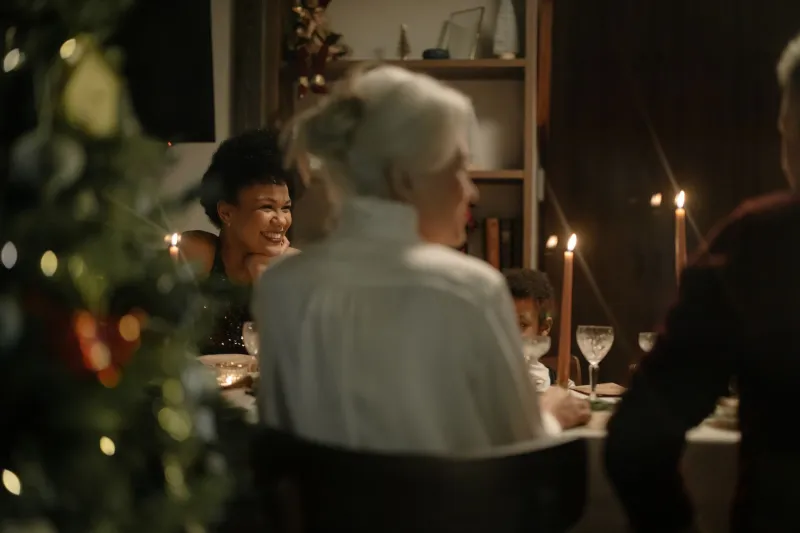
There's a moment that happens in a lot of American households — somewhere between the second helping and the clearing of plates — when someone says something that changes the temperature of the room. Maybe it's a grandmother recounting what it felt like to flee a country that no longer wanted her. Maybe it's a teenager asking why their family doesn't talk about a certain election. Maybe it's a dad who grew up one way raising kids who see the world completely differently, and nobody quite knows how to bridge that.
These moments are messy, sometimes uncomfortable, and almost never tidy. They're also, according to a growing number of educators, community organizers, and researchers, among the most genuinely formative political experiences young Americans are having right now.
The Kitchen Table Has Always Been Political — We Just Forgot to Call It That
Formal civics education in the United States has taken a beating over the past few decades. Budget cuts, standardized testing pressures, and a general drift away from social studies in K-12 curricula have left a lot of young people arriving at voting age with only a vague sense of how democracy actually functions — let alone why it matters to them personally.
But the dinner table never stopped doing its work.
In households where multiple generations share a roof — a living arrangement that's increasingly common across South Asian, Latino, West African, and Southeast Asian communities throughout the country — political conversation isn't a scheduled event. It's ambient. It's the background noise of daily life. Kids absorb the way their elders talk about politicians, about police, about taxes, about belonging. They hear the stories that explain why their family thinks the way it does. And they start forming their own questions.
"My abuela never called it politics," says one community member from a cultural networking group based in Chicago. "She called it la situación — the situation. But she was talking about immigration policy, about labor rights, about who gets to feel safe in this country. I was eight years old and I was getting a masterclass."
When Disagreement Is the Lesson
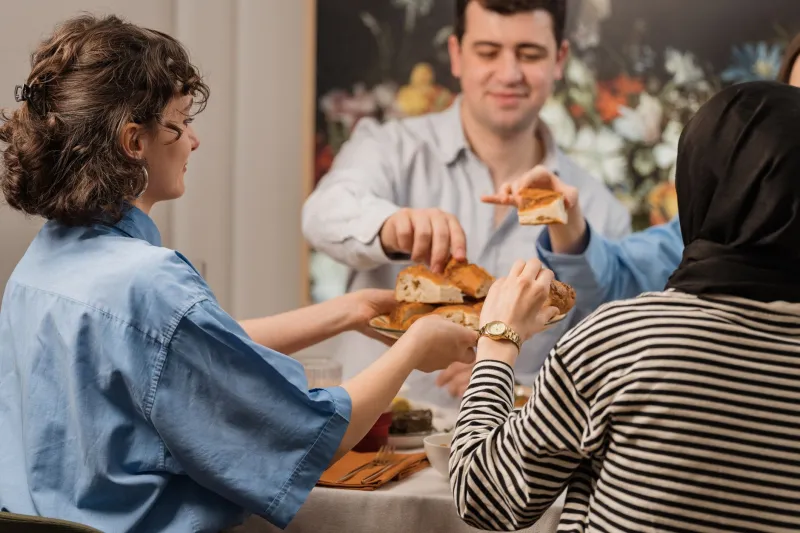
Here's what makes the dinner table different from a classroom or a Twitter thread: nobody gets to just walk away. You're still passing the rice. You still have to look each other in the eye.
That enforced proximity — the fact that you love these people even when you disagree with them — creates a kind of intellectual pressure that formal debate never quite replicates. You can't reduce your uncle to a talking point. You have to actually reckon with him as a full human being who has reasons, even if you think those reasons are wrong.
This is exactly the kind of empathy muscle that community organizations like cultural centers, interfaith councils, and neighborhood civic groups have been trying to build programmatically for years. And yet it's happening organically, every night, in living rooms and kitchens across the country.
Research on family political socialization — the academic term for how kids develop political identities through their home environment — consistently shows that children who grow up in households where political topics are discussed openly (even contentiously) tend to be more engaged voters as adults. They're also more likely to seek out information from multiple sources and less likely to retreat entirely into ideological bubbles.
The Specific Magic of Multicultural Households
For families navigating multiple cultural frameworks at once, the dinner table conversations get even richer — and more complex.
Consider the household where a first-generation immigrant parent holds deeply conservative social values rooted in their country of origin, while their American-raised child has absorbed a more progressive framework from school and peer culture. Or the multigenerational Black family where grandparents who lived through Jim Crow have a visceral, lived-experience relationship to voting rights that their grandchildren are only beginning to understand intellectually.
These aren't just arguments about policy. They're negotiations between entire worldviews. And when they happen with love — when the goal isn't to win but to understand — they can produce something remarkable: a younger generation that holds complexity rather than collapsing it.
"My parents came from Korea with a very specific set of ideas about hard work and self-reliance," one second-generation attendee at a cultural networking event in Los Angeles shared. "And I grew up here with a very different set of ideas about systemic inequality. We used to clash constantly. Now I think I understand both frameworks better than most people who only grew up with one."
Not Every Table Is a Safe Space — And That Matters Too
It's worth being honest here: not every family dinner is a nurturing civics seminar. Some households are dominated by one loud voice that shuts down dissent. Some conversations turn cruel. Some young people learn at the dinner table that their identity is a problem — that their queerness, their political beliefs, their cultural expressions are unwelcome.
Those experiences shape political consciousness too, just differently. They often produce people who find their civic community outside the home — in cultural organizations, in affinity groups, in the kind of chosen-family spaces that CultureConnect has written about before. The dinner table's failure can be the community organization's opening.
But even the difficult tables leave marks. The teenager who spends years deflecting their conservative grandfather's comments learns, by necessity, how to hold their ground without burning a relationship. That's not nothing. That's actually a fairly advanced democratic skill.
What Community Organizations Can Learn From This
If you run a cultural center, a civic engagement program, or any kind of community-building initiative, there's a real lesson buried in all of this: the most durable political education is relational, not transactional.
People don't change their minds — or deepen their thinking — because they received the correct information. They do it because someone they love challenged them. Because a story hit different when it came from a real person sitting across from them. Because the stakes felt personal.
Some community organizations are already building programming that mimics this dynamic — structured dialogue events that bring together people across political and cultural lines for shared meals, intentional conversation, and genuine listening. Groups in cities like Detroit, Atlanta, and Denver have been experimenting with formats that explicitly borrow from the intimacy of domestic space: small tables, shared food, no debate-style format.
The feedback is consistently the same: it works better than a panel. It works better than a lecture. People leave feeling like they actually talked to someone, not at them.
The Table Is Already Set
America doesn't have a shortage of political conversation. If anything, we're drowning in it — on social media, on cable news, in comment sections that make you want to log off forever.
What we have a shortage of is honest political conversation. The kind that happens between people who have to keep living together afterward. The kind where you can't just block someone or mute the thread.
That kind of conversation is already happening, every evening, in millions of American homes. It's happening in English and Spanish and Tagalog and Yoruba and Mandarin and Haitian Creole. It's happening between people who agree and people who very much do not. It's messy and imperfect and sometimes it ends with someone storming off to their room.
But it's also, quietly, building something. One dinner at a time.