Stop Shrinking Yourself: How Americans Are Finally Demanding Spaces Where They Don't Have to Choose
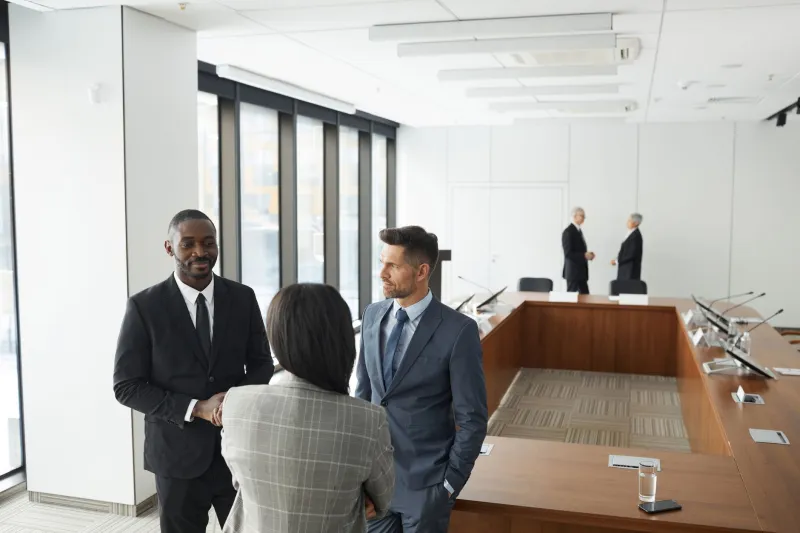
There's a particular kind of exhaustion that doesn't show up on any wellness survey. It's not about sleep deprivation or overwork — though it often travels alongside both. It's the tiredness that settles in after a full day of managing how you sound, how you move, which jokes you laugh at, and which ones you let slide. For a huge swath of Americans — Black professionals, first-generation immigrants, LGBTQ+ folks in conservative communities, Indigenous people navigating mainstream institutions — this is just Tuesday.
Code-switching, the practice of shifting language, tone, and behavior depending on who's in the room, is something most people learn young and carry quietly for decades. It's rarely named out loud. It's just what you do.
But something is shifting. Across American workplaces, community centers, and cultural organizations, a growing number of people are pushing back — not just against the expectation to adapt, but against the whole premise that assimilation into dominant norms is the price of belonging.
The Toll Nobody Talks About
Psychologists have been paying closer attention to code-switching's cumulative weight. Dr. Keisha Monroe, a licensed therapist based in Atlanta who works primarily with Black professionals, describes it this way: "It's a form of chronic vigilance. Your nervous system is always slightly on alert — monitoring, adjusting, performing. Over time, that takes a real physiological toll. It's not just uncomfortable. It's exhausting in a way that compounds."
The research backs her up. Studies have linked persistent identity suppression at work to higher rates of burnout, lower job satisfaction, and reduced sense of self-worth. One often-cited study from the Journal of Experimental Social Psychology found that Black Americans who code-switched extensively in professional settings reported feeling less authentic and more emotionally depleted — even when the switching was consciously chosen as a strategy.
And the stakes are rarely just emotional. For many people, code-switching is a survival skill with real professional consequences attached. "I'm not performing for fun," says Marcus Delgado, a 34-year-old marketing director in Chicago whose parents immigrated from Mexico. "When I soften my Spanish, when I laugh at a joke I find offensive, when I explain my food choices at a client lunch — I'm doing math. Fast math. About what this moment costs me if I push back."
That math, Monroe points out, is a form of labor. Invisible, uncompensated, and deeply unequal in who gets assigned it.
Workplaces That Are Actually Trying
Not every organization is content to leave that math to the individual. A growing number of companies and nonprofits are doing something more structural: redesigning the rooms themselves.
In Oakland, a tech company called Mosaic Labs has built its internal culture around what they call "whole-person onboarding" — a process that explicitly acknowledges cultural background as a professional asset rather than a private detail to be managed. New hires are introduced to employee resource groups on day one. Meetings rotate facilitators across teams. There's a standing policy against penalizing accents or communication styles that deviate from a vague, unexamined "professionalism" standard.
"We had to get honest about what we actually meant when we said someone 'wasn't a culture fit,'" says the company's head of people operations, Priya Nair. "That phrase was doing a lot of dirty work. It was code for 'this person made us uncomfortable.' We had to ask — comfortable for whom?"
It's a question more HR departments are being forced to sit with, particularly in the wake of racial reckoning conversations that gained momentum after 2020. The difference now, advocates say, is that the conversation has moved from sensitivity training to structural change — slower, messier, but more durable.
Community Spaces Filling the Gaps
For many Americans, the workplace isn't where they first find relief. It's in community-built spaces — cultural centers, mutual aid networks, neighborhood organizations — where the expectation to perform drops away.
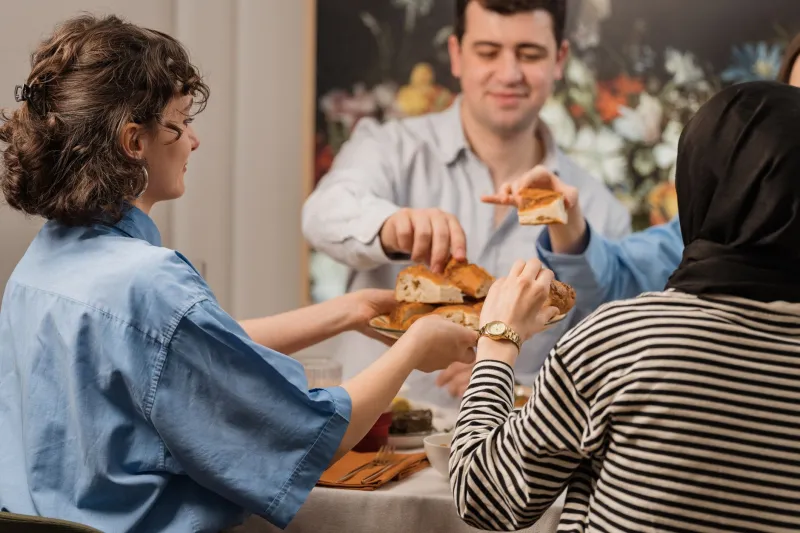
The Chicago-based nonprofit CulturArte runs monthly "open table" events designed specifically for first- and second-generation immigrants navigating dual cultural identities. No agenda, no formal programming — just space to exist with people who understand the particular vertigo of living between worlds.
"We don't tell anyone how to identify," says co-founder Lena Vasquez. "We don't ask you to represent your culture or explain yourself. You can speak Spanish, Spanglish, English, or all three in the same sentence. Nobody's going to ask you to translate."
The demand for these spaces has outpaced the supply. Vasquez says their waitlist has doubled in the past two years. What people seem to be hungry for isn't just cultural celebration — it's cultural permission. Permission to be inconsistent, complex, and fully themselves without the performance tax.
What "Authentic" Actually Means
Here's where the conversation gets genuinely complicated. Authenticity, as a concept, has been weaponized in plenty of directions. Critics of anti-code-switching movements sometimes argue that adapting to context is just... social competence. Everyone adjusts. That's not oppression, it's communication.
The distinction, most advocates argue, lies in who gets to set the default. When the baseline standard of "professional" speech, dress, and behavior is rooted in white, middle-class, Anglo-American norms — and deviation from that standard carries professional or social penalties — the burden of adjustment isn't equally distributed. Some people are adapting to survive. Others are adapting to connect. Those aren't the same thing.
"I'm not saying nobody should ever read a room," says Dr. Monroe. "Reading a room is a skill. But there's a difference between choosing to adjust and feeling like you have no choice. One feels like fluency. The other feels like hiding."
The goal, as many community leaders and therapists frame it, isn't the elimination of adaptability — it's the expansion of what counts as normal. More rooms where more versions of yourself are genuinely welcome. Fewer rooms where entry requires self-erasure.
Building the Rooms We Need
The practical work of building those rooms is unglamorous and ongoing. It involves policy rewrites, difficult conversations, and a willingness on the part of dominant-culture members to sit with discomfort rather than resolving it by asking others to shrink.
But it also involves something simpler: showing up to the spaces that already exist. Cultural organizations, community centers, affinity groups, and neighborhood networks are doing this work right now, often with limited funding and massive need.
For Marcus Delgado, relief has come in small, accumulating moments — a manager who didn't flinch when he slipped into Spanish, a team meeting where someone else made the same kind of joke he'd been biting back for years, a neighborhood block party where nobody asked him where he was "really" from.
"It's not like one day everything changes," he says. "It's more like — you start noticing the rooms where you're not doing the math. And you try to spend more time in those rooms."
That, it turns out, might be the whole project. Not a single cultural revolution, but a slow, deliberate accumulation of spaces where the math isn't required. Where you walk in and stay whole.
Where belonging doesn't cost you anything you weren't willing to give.