Everyone Brings a Dish, Everyone Gets a Say: What the Potluck Teaches Us About Living Together
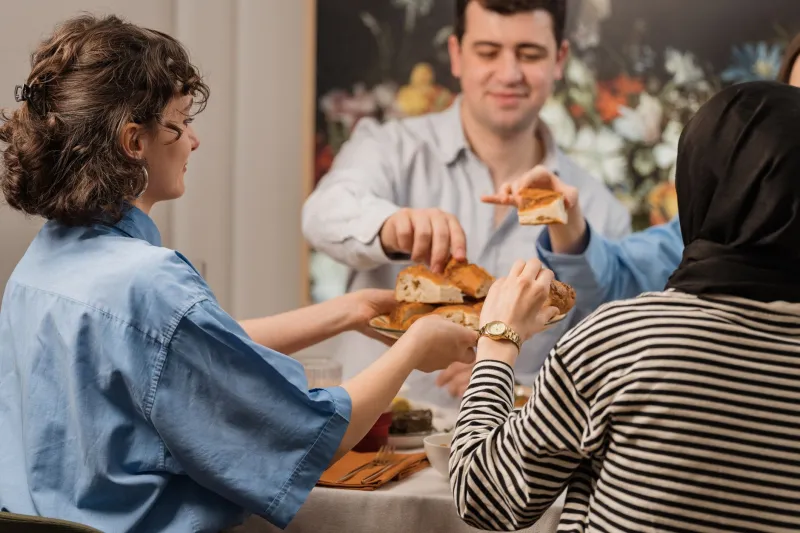
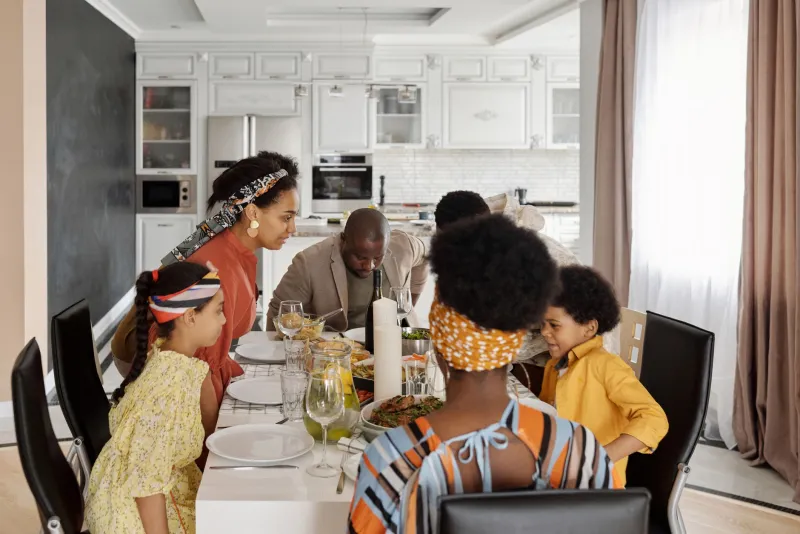
There's a moment at every potluck — you've probably felt it — when the table fills up and nobody quite planned for it to look like this. A slow-cooked Haitian legume sits next to a Jell-O salad from someone's Iowa grandmother. A pan of Korean japchae edges up against a tray of tamales someone's abuela started making at 6 a.m. Nobody coordinated it. Nobody had to. And somehow, it works.
That moment is more than just a happy accident. For a growing number of community organizers, neighborhood associations, and cultural groups across the country, the shared meal has become something of a laboratory — a low-stakes space where some of the biggest questions about representation, fairness, and collective decision-making get quietly, deliciously worked out.
The Table as Town Hall
In Portland, Oregon, a neighborhood coalition called the Jade District Community Table has been hosting monthly dinners for the past six years. What started as a simple effort to get longtime residents and newer arrivals talking eventually evolved into something more structured — and more revealing.
"We started noticing that the conversations happening over food were way more productive than anything that happened in a formal meeting," says one of the group's founding organizers. "People were negotiating, compromising, advocating for their dish — and then they'd carry that same energy into talking about the block grant or the park renovation."
The group now uses its dinner planning process as an explicit model for community governance. Who decides what gets brought? How do you make sure the one vegan in the group doesn't end up with nothing to eat? What do you do when two people both want to bring dessert? These aren't trivial questions. They're the same questions that democratic institutions wrestle with every day, just with lower stakes and better snacks.
Representation on the Menu
Food has always been political, even when nobody's talking about politics. What gets served at a community dinner — and what doesn't — tells you a lot about whose culture is centered and whose gets treated as an interesting garnish.
In Detroit's Mexicantown neighborhood, a community organization called Raíces Comunitarias started auditing their own potluck traditions a few years back after a younger member pointed out that the "default" dishes at their gatherings skewed heavily toward one regional Mexican tradition, leaving out members whose families came from Oaxaca, Veracruz, or further south.
"It sounds small, but it wasn't," says a member who helped facilitate the conversation. "When your food isn't on the table, you feel it. You feel like a guest at your own party."
The solution they landed on was simple but thoughtful: rotating "dish spotlights" where different members get to introduce their contribution, share its story, and answer questions. It slowed the meal down. It also deepened it. Attendance went up. So did the number of people willing to take on volunteer roles.
That's not a coincidence, say community organizers who study civic engagement. When people feel genuinely seen — when their contribution is treated as essential rather than decorative — they invest more. The potluck, it turns out, is a pretty good prototype for that.
What Happens When There's Conflict
Not every potluck is a harmonious success story, and that's kind of the point.
In a Chicago neighborhood with a large South Asian population alongside longtime African American residents and a newer wave of Central American families, a community center started hosting quarterly "unity dinners" that quickly became more complicated than anyone expected.
There were real tensions — over dietary restrictions that clashed (halal requirements bumping up against dishes cooked with pork), over who felt comfortable cooking for a crowd that might not recognize their food, over the exhausting labor that often fell disproportionately on women. One dinner devolved into a genuinely heated argument about whether it was fair to ask people to label every dish with its ingredients.
But here's the thing: they worked it out. They created a shared labeling system. They started a small fund so that families who couldn't afford to bring a large dish could contribute in other ways. They built a rotating planning committee that made sure no single cultural group was doing all the invisible work.
"We basically built a small government," laughs one longtime participant. "A very delicious small government."
The Generational Remix
One of the most interesting dynamics playing out at community food gatherings right now is the tension — and eventual fusion — between generations.
In many immigrant communities, older members often feel a strong pull toward traditional dishes as a form of cultural preservation. Younger members, meanwhile, are more likely to show up with something that reflects their hybrid identity: maybe a Vietnamese banh mi reimagined as a slider, or a Filipino adobo taco that their lola might raise an eyebrow at.
Rather than a source of conflict, smart community organizers are treating this as a feature, not a bug.
A cultural association in Houston's Mahatma Gandhi District started a program called "Old Recipe, New Story" where younger members work alongside elders to adapt traditional dishes for community potlucks — keeping the core flavors and techniques while making them accessible to a broader crowd. The process generates hours of conversation, storytelling, and cross-generational connection that no structured program could manufacture.
"The food is almost secondary," admits one of the program's facilitators. "What we're really doing is giving people a reason to sit together and figure out who they are to each other."
Why This Scales
It's tempting to see community potlucks as a warm-and-fuzzy footnote to more serious civic work. But there's a compelling argument that this is exactly backward.
Formal democratic processes — town halls, city council meetings, public comment periods — are notoriously bad at generating genuine participation, especially from communities that have historical reasons to distrust institutions. They're intimidating, they're often scheduled at inconvenient times, and they require a certain fluency in bureaucratic language that not everyone has.
A potluck asks nothing of that kind. It asks you to show up with something you made, something you care about, something that represents you. And then it asks you to share it.
That's a remarkably low barrier to entry for something that ends up teaching consensus-building, representation, conflict resolution, and collective ownership — the full civic toolkit, basically, served alongside someone's grandmother's cornbread.
Community organizers from coast to coast are starting to take this seriously, using food-sharing events as explicit on-ramps to deeper civic engagement. Bring someone to a potluck, the thinking goes, and you've got a much better shot at bringing them to a planning meeting six months later.
Pull Up a Chair
America has always been, at its best, a kind of potluck — a place where people show up with whatever they've got and figure out how to make a meal of it together. That's not just a metaphor. It's a practice, and like any practice, it gets better the more you do it.
The communities getting this right aren't waiting for some grand national conversation about unity or shared values. They're just setting a longer table and making sure everyone knows there's room to bring what they've got.
Which, when you think about it, is about as democratic as it gets.