Your Neighbor Knows the Truth: How Block-Level Storytelling Projects Are Filling the Gaps Mainstream News Left Behind
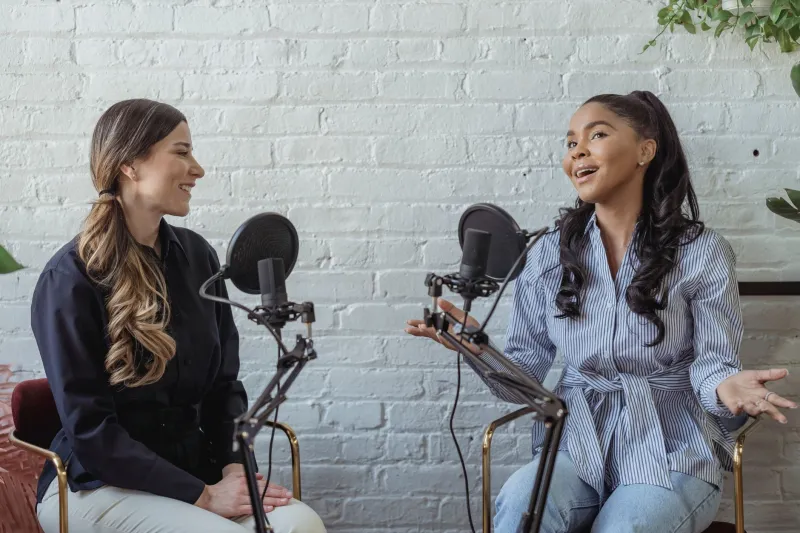
Every Tuesday evening, a group of eight women gathers in the back room of a Somali restaurant in Minneapolis. They bring tea, sometimes food, and always stories. One woman records everything on her phone. Another transcribes later. The recordings get edited — minimally — and released as episodes of a podcast called Hooyo Speaks, which translates roughly as "Mother Speaks."
The show has no studio, no advertisers, no media company behind it. It has, however, a fiercely loyal audience of several thousand listeners, most of them Somali-American women in the Twin Cities diaspora who describe it as the only media they've encountered that actually reflects their lives.
"The news talks about us," says Fadumo Hassan, one of the founding members. "But it doesn't talk to us, and it definitely doesn't let us talk for ourselves. We got tired of waiting."
The Trust Collapse and What Grew in Its Place
American trust in mainstream media has been in freefall for years. Gallup polling consistently shows that fewer than a third of Americans express a great deal or fair amount of confidence in newspapers and television news. In communities of color, that skepticism runs deeper still — rooted not just in general media fatigue but in decades of coverage that ranged from inadequate to actively harmful.
Into that vacuum, something organic has been growing. Community oral history projects, neighborhood podcasts, block-by-block documentation initiatives, and storytelling circles are proliferating across the country — particularly in immigrant communities, Indigenous communities, and communities that have historically been covered by mainstream media rather than included in it.
These aren't just feel-good heritage projects. They're functioning as alternative information systems — places where community members can learn what's happening in their neighborhoods, process shared experiences, and make sense of a world that mainstream journalism often fails to adequately explain to them.
More Than Memory-Keeping
It would be easy to frame this movement as primarily about preservation — saving stories before they're lost, archiving culture for future generations. And that's part of it. But the storytelling projects gaining the most traction are doing something more immediate: they're serving as genuine civic infrastructure.
In South Phoenix, a community documentation project called Voces del Sur started as an oral history archive collecting accounts from longtime Latino residents about neighborhood change and displacement. Within two years, it had evolved into something more active. Residents were using the recordings as evidence in city council meetings. Journalists were citing them. A local housing nonprofit used testimonies from the archive to support a successful campaign against a zoning change.
"We realized our stories were data," says project co-founder Marisol Contreras. "And data that nobody else had, because nobody else had bothered to collect it."
This reframing — community narrative as civic evidence — is one of the most significant shifts happening in the storytelling movement right now. When a neighborhood's collected memory becomes part of the public record, it changes what's possible politically and legally.
The Podcast Circle as Community Institution
The format matters too. Podcasts, in particular, have become a surprisingly powerful medium for community storytelling — partly because the barrier to entry is genuinely low, but also because audio has an intimacy that text often lacks. Hearing someone's voice, their pauses, their laughter, their accent, communicates something that a written transcript simply can't.
In Atlanta's Vietnamese-American community, a collective called Tiếng Vọng (roughly: "echoes") produces bilingual episodes featuring first- and second-generation community members in conversation with each other. The explicit goal is bridging the language gap that often separates immigrant parents from their American-born children — using shared storytelling as the connective tissue.
"My mom and I don't always have the vocabulary to talk about hard things," says one of the show's younger hosts, who goes by the name Minh on the podcast. "But when we're recording, something shifts. We're both trying to explain ourselves to an audience, and that makes us more careful, more generous with each other."
The show's most downloaded episode is a three-part conversation between a Vietnamese grandmother and her American-born granddaughter about the 1975 fall of Saigon. It has been used in university classrooms across the country.
What Makes Community Storytelling Trustworthy
Here's the thing about trust: it's not abstract. People trust sources that have demonstrated, over time, that they understand and care about the audience's specific reality. Mainstream media, operating at scale and under constant resource pressure, has struggled to do that for communities that aren't the default American audience.
Community storytelling projects, by contrast, are built entirely from insider knowledge. The person asking the questions grew up on the same streets. They speak the same languages, literal and cultural. They know which stories have been told wrong before, and they care about getting it right — not because of professional obligation, but because these are their people.
That's not a small thing. In an information environment saturated with content and starved of context, knowing that a source is genuinely accountable to the community it covers is enormously valuable.
The Infrastructure Question
The main challenge facing community storytelling projects isn't audience — it's sustainability. Most operate on volunteer labor, small grants, and sheer determination. When the founding energy fades, or when key contributors move away or burn out, projects can collapse without warning.
A handful of organizations are working to build more durable infrastructure. Some community foundations are beginning to fund oral history and documentary journalism projects as part of their civic engagement portfolios. A few universities have partnered with neighborhood storytelling initiatives to provide technical training and archival support.
But the field is still young and underfunded relative to its reach and impact. The storytelling revolution is real — it just needs more people to take it seriously as the civic institution it's quietly becoming.
Back in Minneapolis, Hooyo Speaks just released its 80th episode. Fadumo Hassan is already thinking about what 100 looks like. She wants to do a live recording at the community center, she says — something where the audience can be in the room, can respond, can add their own voices to the archive.
"Stories want to move," she says. "They don't want to sit still in one person's memory. They want to travel."